
The Home Front
Chaffee Housing Authority Update
Q2 2026
The Chaffee County Regional Housing Needs Assessment: What It Measures and Why
Written by Sarah Brown McClain, CHA Board Member
Ask almost anyone in Chaffee County about housing and you hear the same two things: it costs too much, and there is not enough of it. Measuring that problem with real numbers — how big the shortfall is, what kind of homes, and at what price — is the work of a Housing Needs Assessment, and the county has one underway.
Chaffee County, the City of Salida, the Towns of Buena Vista and Poncha Springs, and Chaffee Housing Authority are partway through a Regional Housing Needs Assessment RHNA), the first full update since 2022, and it will shape how the region plans for housing over the next decade. Here is what it is, why the community is doing one, and what to expect.
What it is. A Housing Needs Assessment identifies the type and amount of housing a community needs so that the people who live and work here, now and in the years ahead, can find homes they can afford. It does more than count the units a growing population will require. It looks at who lives and works in the county, what they earn, what housing already exists, how the market is behaving, and what residents and employers are telling us — the many pieces that together form a clear picture of local housing.
What we mean by "need."Need is not the same as what the market happens to build. The market builds what is most profitable, and, most often, that is often not the housing the community needs. Need is what households actually require to live and work here with some stability — homes they can rent or buy without stretching beyond their means. It covers the homes the county is short today, for people doubled up, unfilled jobs, or driving in from outside because nothing closer fits their budget, as much as the homes a growing community will call for. The measure is the same either way: how many homes, what kind — to rent and to own — and at what prices local households can afford them.
What the number means. The result is an estimate — a target to plan toward, not a building order. It does not mean the county must pour that many new building foundations, and the gap is not closed by new construction alone. A community meets its housing needs with a range of tools: building new homes, yes, but also keeping existing homes affordable through deed restrictions and preservation, helping residents afford the homes already here, and making it easier to build the homes that are hardest to find. The number tells the community the size and shape of the problem so it can choose how to solve it.
Why do an HNA. Colorado now requires it. Under a 2024 state law, Senate Bill 24-174, every local government must complete a Housing Needs Assessment and follow it with a Housing Action Plan. But the law only formalizes what good planning already asks for: a shared, factual starting point instead of competing anecdotes, and the evidence that housing projects and grant applications depend on.
Who does what, and what comes next. The four local governments — the county, Salida, Buena Vista, and Poncha Springs — commissioned this assessment together. This spring's housing survey and the May community meetings in Buena Vista and Salida were one step in that work: gathering what residents, workers, and employers are living through. That input is one part of a much larger analysis. Over the coming months it is woven together with the rest of the data into the full picture the assessment is built on.
After the Housing Needs Assessment is completed, the findings will be used to develop a Regional Housing Action Plan. The needs run across the whole spectrum — renters and owners, the unhoused and working families priced out of a first home, the county's youngest workers and its retirees. The assessment shows which of those needs the market will meet on its own, which existing programs already reach, and where the gaps remain. The plans are where each community weighs the options, sets priorities, and comes together on what to do.
Carrying that out will take many hands — local governments, CHA, nonprofits like the Chaffee Housing Trust and Habitat for Humanity, builders and developers, employers and businesses, lenders and philanthropy, and residents. No single organization can do it alone, and who takes on what is part of what those plans will work out. What ties all of it together is one goal: a Chaffee County where the people who live and work here can afford to stay — a strong, diverse, and thriving community.
To follow the project and sign up for updates, visit ChaffeeHousingPlan.org.
Proposition 123: $16.87 Million At Work in Chaffee County
Written by Sarah Brown McClain , CHA Board Member
Finding capital to close the gap between what it costs to build housing and what community members can afford is one of the core functions of CHA. In Colorado, we are incredibly fortunate that Colorado voters approved a permanent state fund for affordable housing in 2022. This funding was created not as a new tax, but by dedicating a share of the income tax the state already collects to address housing. It is one of the steadiest housing funding sources in the country, and Chaffee County has made good use of it. The Prop 123 revenue is distributed to two agencies on a 40-60 percent split to the Department of Housing (DOH) and the Office of Economic Development and Trade (OEDIT).
To participate, a local government files a commitment to increase its affordable housing, and that commitment unlocks the fund — not only for the town or county, but for the housing partners that build and run programs here. Those dollars reach residents as homes to rent or buy and as down-payment help for local buyers. All four Chaffee jurisdictions — the County, Salida, Buena Vista, and Poncha Springs — chose to opt in filing for a combined total of 94 units, which is why the whole county can draw on the program.
Since 2022, Chaffee projects have brought in nearly $17 million in Proposition 123 dollars — more than any county in the central mountains. Prop 123 money sits behind new projects including The Crossing, Midland, and Alpine West in Buena Vista; the Flour Mill, Scott Street, and the South Arkansas Neighborhood in Salida; mobile home park preservation in Johnson Village and Poncha Springs; homeownership and down-payment help through the Chaffee Housing Trust; rental assistance through Salvation Army; and local government planning grants for what comes next. It has added up because the pieces are in place: an active housing authority, a housing trust, developers and nonprofits bringing projects forward, and four local governments willing to work together. CHA has played a key role in supporting private developers and nonprofits with writing Prop 123 applications, leveraging the Prop 123 funds with $3.2M in additional state funding for projects, as well as winning a Prop 123 award for a CHA land purchase.
Participating also means committing to a faster, more predictable review for affordable housing — the fast track — so that projects providing more than 50% affordable housing have clear permitting without long delay. Chaffee County, the City of Salida, and Town of Buena Vista have all adopted fast tracking into their regulatory codes.
Here is the part worth remembering. Proposition 123 is one piece of a larger affordable housing toolkit that also includes federal tax credits, state housing grants, and down-payment programs. Together these cover some of what a housing project costs — but nearly all of them ask the community to bring a share of its own. Every local dollar Chaffee puts in draws three or more from outside the county. That is the quiet power of this work: a modest local commitment, matched and multiplied into homes our community can afford.
Prop 123 does require local governments track and demonstrate impact. The Prop 123 first commitment cycle for 2023-2026 ends December 31st. Over the next few months, local governments will be working together to ensure our region is in compliance with their current commitments and developing targets for the second three year cycle that begins January 1, 2027.
Prop 123 has become a national model for how a state government can support affordable housing. However, over the next three years, Prop 123 OEDIT funds will be decreased as a result of the need to balance the state budget. The Prop 123 legislation includes a provision that OEDIT funds can be used in years of shortfall. Starting in fiscal year 2026-2027, OEDIT’s Prop 123 will be reduced by $50M and $40 million in each of the following two fiscal years.
While this will no doubt have an impact on the pace of affordable housing investment in Chaffee County, CHA is working with local government and nonprofit partners to identify strategies and priorities for ensuring our community remains competitive and continues to see new affordable housing created.
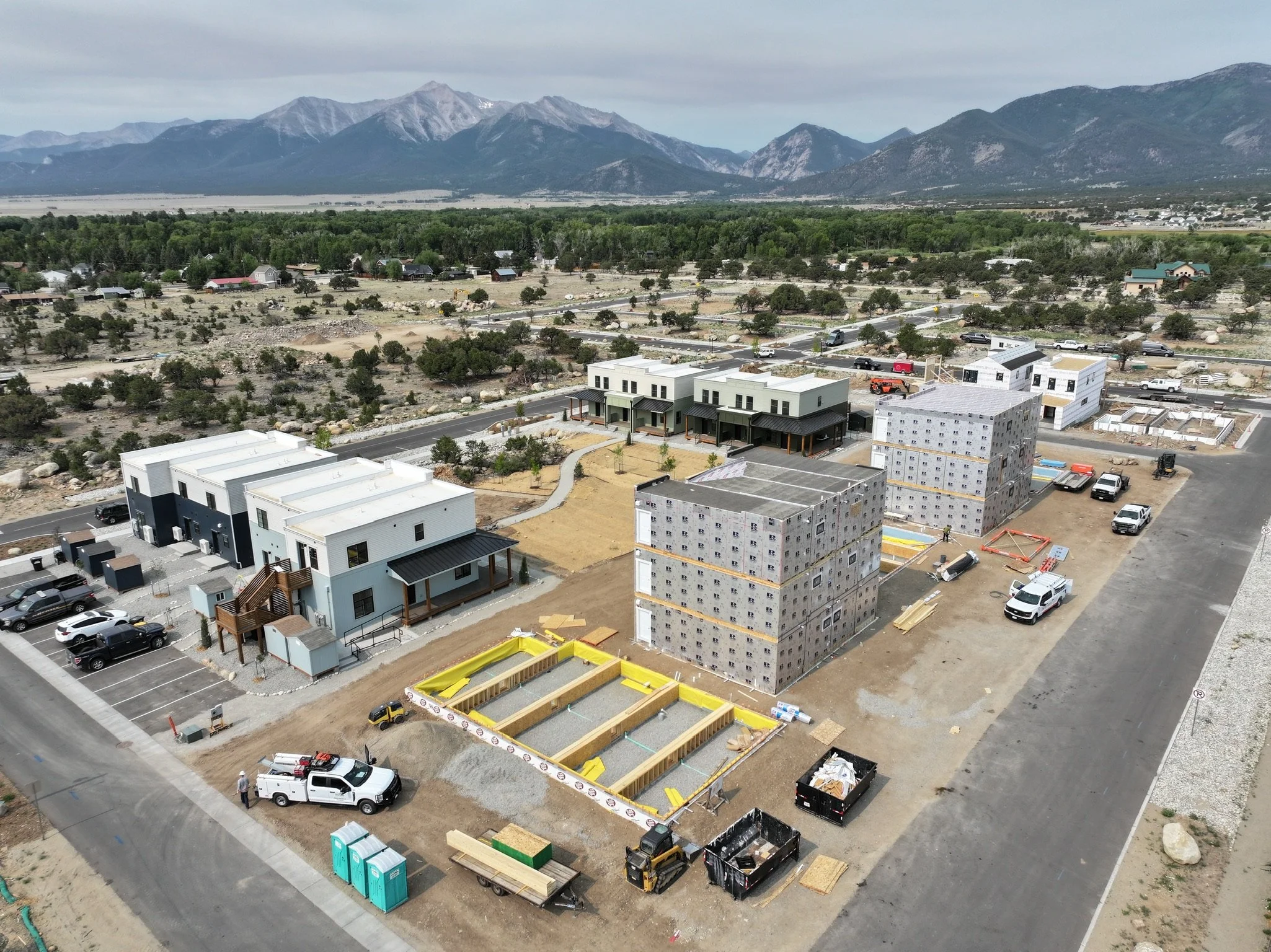
The Crossing Apartments in Buena Vista is a 33-unit modular apartment project under construction by Crossman Ltd. in partnership with CHA. Construction is anticipated to be complete in November or December.
Being Homeless in Chaffee County: What Homelessness in our Community Really Looks Like
Written by Carley Smith, CHA Board Member
When the word homeless is used, most people immediately picture a familiar and well-known stereotype. The reality, however, is far more complicated. There is a difference between housing insecurity, temporary homelessness, and chronic homelessness, though few know what those differences are. This lack of understanding often perpetuates the stereotype people think of when it comes to the homeless. While all three types of populations exist within Chaffee County, the people most at risk of losing their housing in our community may not be who people expect.
Families with children and older adults are among the populations most vulnerable to homelessness in our community - imagine a working parent struggling to find an apartment they can afford or a senior living on a fixed income living in an old RV because they cannot afford rent. When it comes to housing insecurity, these are the individuals and families most frequently seeking assistance from the Chaffee Housing Authority.
To address this reality, the Department of Human Services and CHA partnered on a joint initiative, the Stable Families Program, initiative, to address homeless families. With funding provided by the Bezos Family 1 Day Fund, DHS and CHA has served 38 families experiencing homelessness over a two-year pilot period. Program participants were not individuals unwilling to work or contribute to the community. They were parents and caregivers doing everything they could to maintain stability for their families while navigating an increasingly difficult housing market, low wages, rising inflation, and most often, a personal health or family crisis.
Some of the families served were able to move into available housing through the Chaffee Housing Authority relatively quickly. Others spent months living in emergency shelter options such as hotel rooms while searching for housing, submitting applications, and waiting for an opportunity to become available. The financial and emotional toll of this uncertainty can be overwhelming for parents, and especially so for their children.
Recognizing hotels are an inadequate housing solution, CHA created Molly House at Jane’s Place to provide a more stable and cost-effective temporary housing option for families and seniors experiencing homelessness and housing insecurity. Molly House serves as a bridge for families and seniors between crisis and permanent housing, helping residents remain connected to their jobs, schools, and support systems while they work toward long-term stability. By bridging this interim phase, Molly House provides the essential stability that families and seniors need to navigate challenging life transitions while remaining in the area.
The importance of Molly House can not be understated for the families and the people that it is serving. However, even with these resources, not every family is able to remain in the community. Several families served through the Stable Families Program ultimately have had no choice but to leave Chaffee County in search of housing elsewhere, where more supportive services are available.
Homelessness in Chaffee County often looks different than many people imagine. More often than not, it is a family trying to keep their children enrolled in school, a senior who chose medication over paying rent, or a working individual struggling to keep pace with rising housing costs. Understanding the true face of homelessness is an important step toward building solutions that ensure all members of our community have a safe and stable place to call home.
Annual Report on Homelessness in Chaffee County Released
Each year, communities across the country participate in the Point in Time Count (PIT) to improve community understanding of the unique needs and circumstances of people who are affected by being unhoused. The PIT Count provides information to help communities develop effective responses to local needs. However, when reviewing the data it is important to understand it may not necessarily reflect a trend line. Rather, it is a snapshot of homelessness over a week-long period and can be influenced by factors such as weather, methodology, participation rates, and volunteer capacity.
The Colorado Department of Local Affairs (DOLA) serves as the lead agency for collecting data submitted by individual communities to create both county, regional and statewide summaries. The recently released 2026 Colorado PIT - State Homeless Report shows that Chaffee County recorded at least 73 total individuals as homeless.
So who gets counted as homeless? The formal Housing and Urban Development definition is an individual or family who lacks a fixed, regular, and adequate nighttime residence including people living in places without running water or electricity. However, the context for homelessness is much more complex with subpopulations, each with their own unique needs. The PIT count aims to include:
Episodic or Chronic Homelessness: Individuals who cycle between being housed and unhoused at least three times a year or more. Frequently, the individuals in this situation struggle with untreated mental health and/or substance abuse issues that make rehousing more challenging. They may require more intensive and specialized wrap around services that offer longer term support.
Situational Homelessness: This is the most common form of homelessness and generally affects people who are experiencing a temporary phase triggered by a major life event (e.g., job loss, natural disaster, eviction or loss of housing, domestic violence, health issues, etc.). Without a personal support network and adequate housing options, these individuals or households are left to rely on public and community support services to get rehoused and stabilized.
Hidden Homelessness: This population is most often employed, living off of savings, or on a fixed income. These individuals and families lack finding housing they can afford but stay out of the public view by living in motels, cars, RVs, or couch-surfing with others. This is the hardest population to count.
In this year’s PIT count, Chaffee Hospitality and CHA reported 23 individuals who were sheltered staying in the evening warming shelters or hotels. CHA, along with many community partners, counted an additional 50 unsheltered individuals who were in encampments or identified when they visited local service sites including community showers, food pantries, health centers, the library and many other locations. Of the total individuals counted, only 23% were considered chronic homeless. Additionally, 71% of those counted were living as households. While efforts were made to include those living in their vehicles and RVs, our hidden homeless population was almost certainly undercounted.
Chaffee County has limited resources to support individuals and families struggling with homelessness, especially when faced with complicating factors like mental health disorders, disabilities, and addiction. Support is provided by local faith-based organizations, Chaffee Hospitality, public safety departments, Chaffee Public Health, Department of Human Services, the Alliance, UAACOG, Sol Vista, the Early Childhood Center, and many more all working together to help people access what help we do have available.
CHA sees all types of needs walk through our doors and we provide referrals out to our local, regional, and statewide resources for all types of situations; but CHA’s programming is focused on two primary strategies:
Prevention: Working to keep at-risk individuals and families in their current homes through interventions like coordinating temporary rent or utility assistance, accessing federal and state resources, resolving conflicts, etc.
Rapid Rehousing: Helping individuals and families experiencing homelessness quickly exit homelessness and secure permanent housing through housing navigation services, enrollment in the DHS/CHA Stable Families Program, and/or utilizing Molly House as bridge while awaiting permanent placement.
At the beginning of June, the State of Colorado signed HB 26-1202 which aims to increase coordination across the state on how to address homelessness. This new legislation (1) gives direction to the Colorado Department of Housing to draft a statewide strategy including rural communities who often lack resources, and (2) gives authority to counties to allocate any excess real estate filing fees to a dedicated housing fund for homeless services and housing.
While homelessness can feel overwhelming, there is something you can do:
Support local efforts to build more affordable housing. Ultimately, homelessness is a housing issue.
Donate to local homeless support efforts at your church, Chaffee Hospitality, the Alliance for Domestic Violence or other organizations.
Volunteer! The Senior Center, Presbyterian Church, and CHA use volunteers to help enroll households in utility assistance programs to help them stay in their homes.
Contact Caring and Sharing about donating clothing or personal care items (shampoo, toothpaste, etc.).
Make a monetary contribution to CHA to support Molly House and our Housing Stability Program. You can donate on our website or through our annual Chaffee Gives Campaign.
Become an ambassador! Tell others about who you support and why it matters.
Available Rentals and For Sale Homes
Available Rentals
It is the height of summer occupancy and CHA has very few to no vacancies in CHA’s most affordable apartments. If you are looking for a rental and do not see anything in your price range, please reach out to us directly. We may have a lead to housing we do not manage or can add you to our waitlist. We do have options for 1, 2 and 3 bedrooms at the Midland and Crossings in Buena Vista for households earning incomes above 80% AMI.
See our rental listing here.
View income qualifications here.
City of Salida Inclusionary Home For Sale
The City of Salida Inclusionary Housing Program home sales are managed by the CHA. Sign up for our Homeownership Interest Newsletter to keep informed about opportunities by signing up at: https://www.chaffeehousingauthority.org/buyers
318 E 1st St Unit D, Salida, CO 81201
$408,000
A cute, stand-alone 850 square foot, 2 bedroom/2 bath home with an attached garage and potential office is for sale by owner. The current owner's goal is to close no earlier than October giving time for a Chaffee County resident to work though the homebuying process. Learn more: https://www.chaffeehousingauthority.org/homes-for-sale
Chaffee Housing Trust Homes For Sale
The Chaffee Housing Trust currently has homes for sale in Salida and Buena Vista. These homes are a great opportunity for community members who believed homeownership was out of reach for them. To learn more about the CHT homes and homebuying process, please contact CHT or visit the CHT website (El sitio web del CHT está disponible en español a https://www.chaffeehousing.org/casa)
For Sale In Salida
1 bedroom/1 bath condo in River Ridge for $165,000 available to households earning equal to or less than 80% of Chaffee County Area Median Income.
2 bedroom/1.5 bath condos at Two Rivers for $226,000 available to households earning equal to or less than 80% of Chaffee County Area Median Income.
2 bedroom/1.5 bath condos at Two Rivers for $218,000 available to households earning equal to or less than 80% of Chaffee County Area Median Income.
2 bedroom/1.5 bath condos at West End for $305,000 available to households earning equal to or less than 100% of Chaffee County Area Median Income.
For Sale in Buena Vista
Live in Buena Vista’s newest development, The Crossing. Homes are available to households earning equal to or less than 100% of Chaffee County Area Median Income including:
1-bedroom/1 bath home for $235,000.
2-bedroom/1.5 bath for $285,000.
3-bedroom/2 bath home for $350,000.
View the flyer here.
Live in a lush meadow amongst the cottonwoods near Cottonwood Creek at Forest Creek Cabins. Homes are available to households earning equal to or less than 100% of Chaffee County Area Median Income including:
1 bedroom/1 bath for $155,000.
Two 2-bedroom/1 bath for $175,000.
A 2 bedroom/2 bath plus an office for $325,000.
Two 2 bedroom/1 bath in a duplex for $225,000 each.
View the flyer here.
Introducing NestQuest
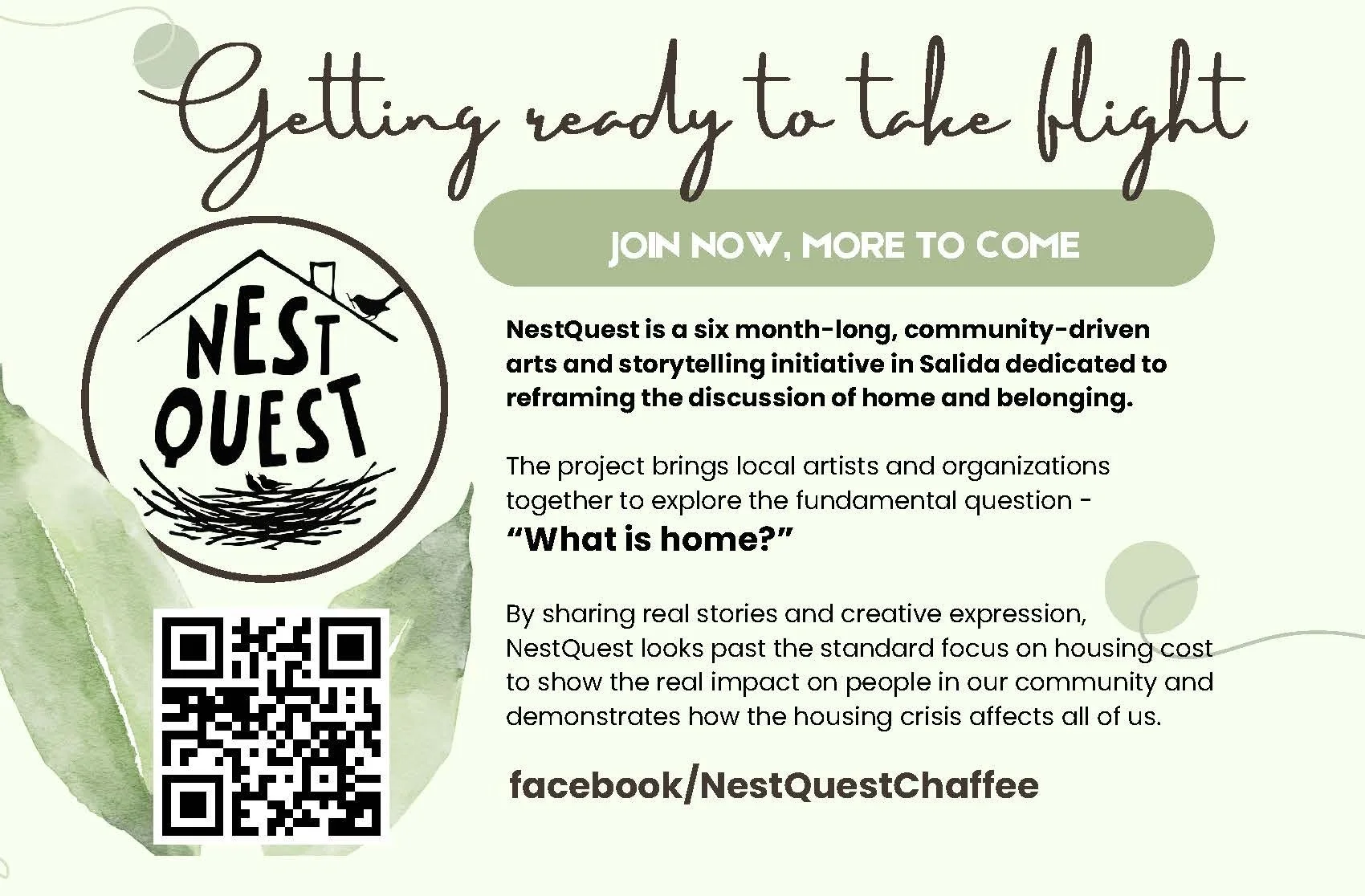
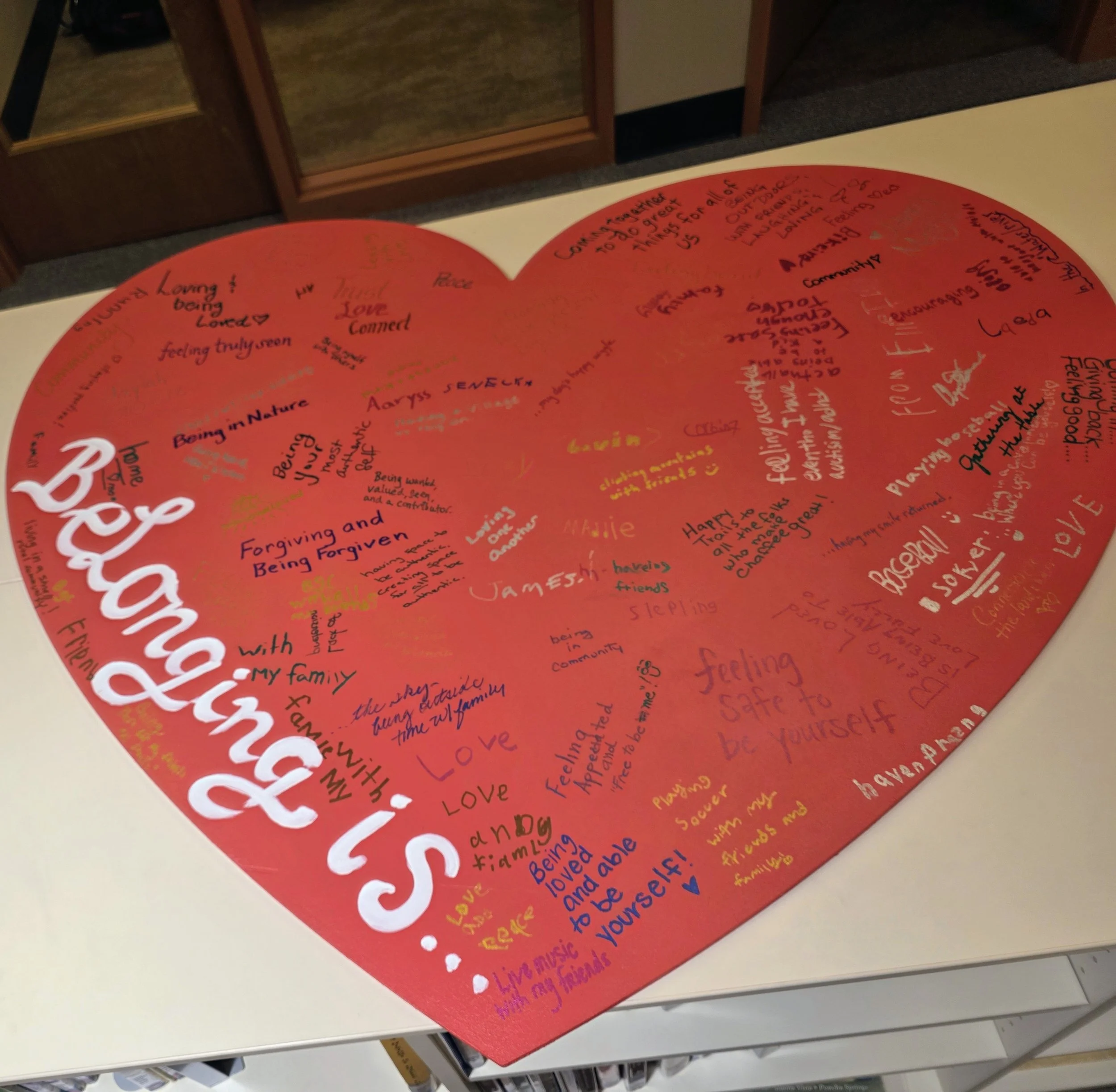
We Are Chaffee’s Future Belonging Mural Tour
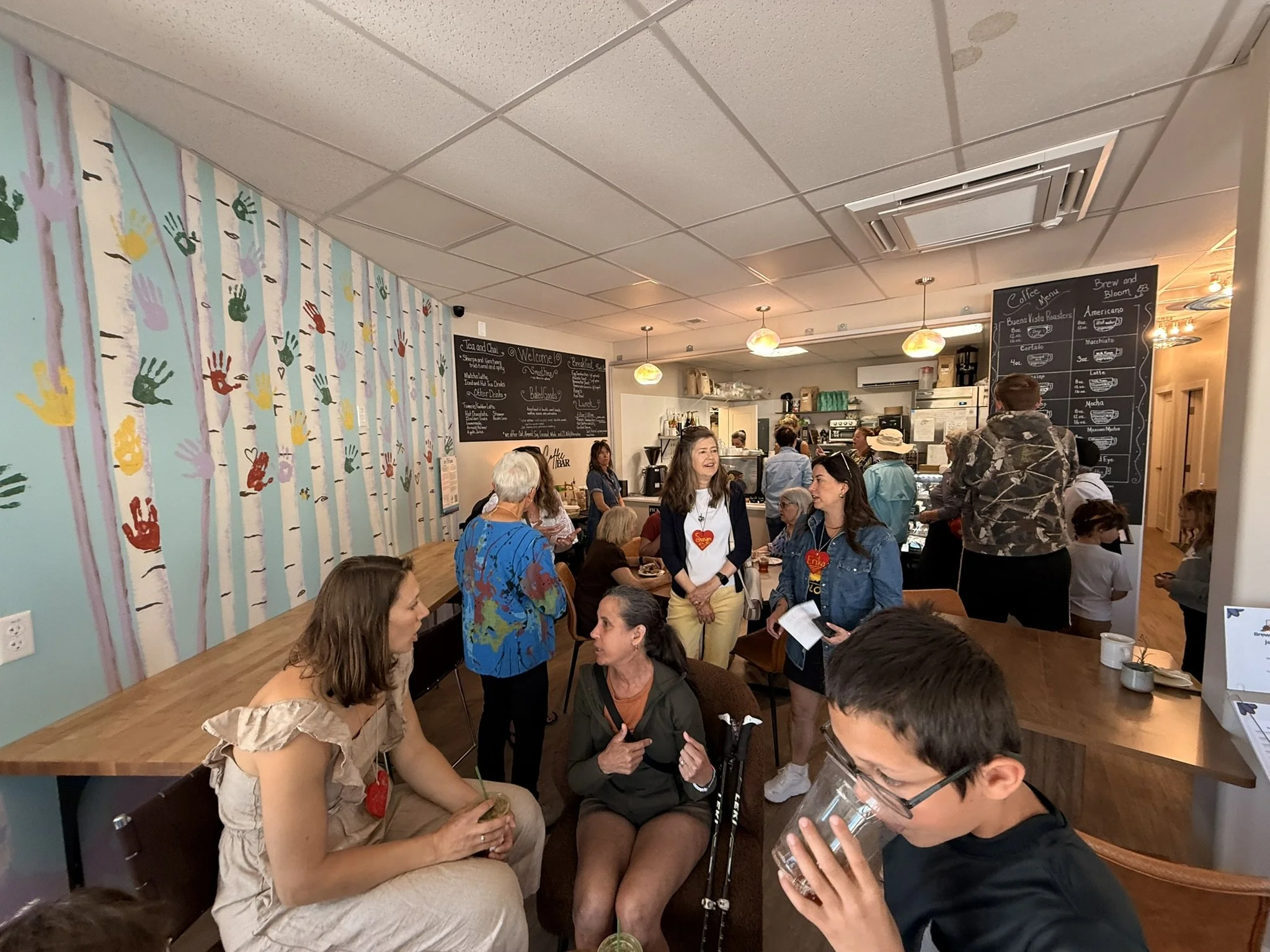
The first NestQuest event was a mural tour on June 10th sponsored by Chaffee County’s Public Health Department’s We Are Chaffee initiative. Five murals, designed and created by volunteers aged 15 to 79 with guidance from two artists, celebrates the theme of belonging. The first stop on the tour was Jane’s Place where a mural decorates the Brew and Bloom Coffee Shop.
Join CHA in a Book Club Discussion of Evicted
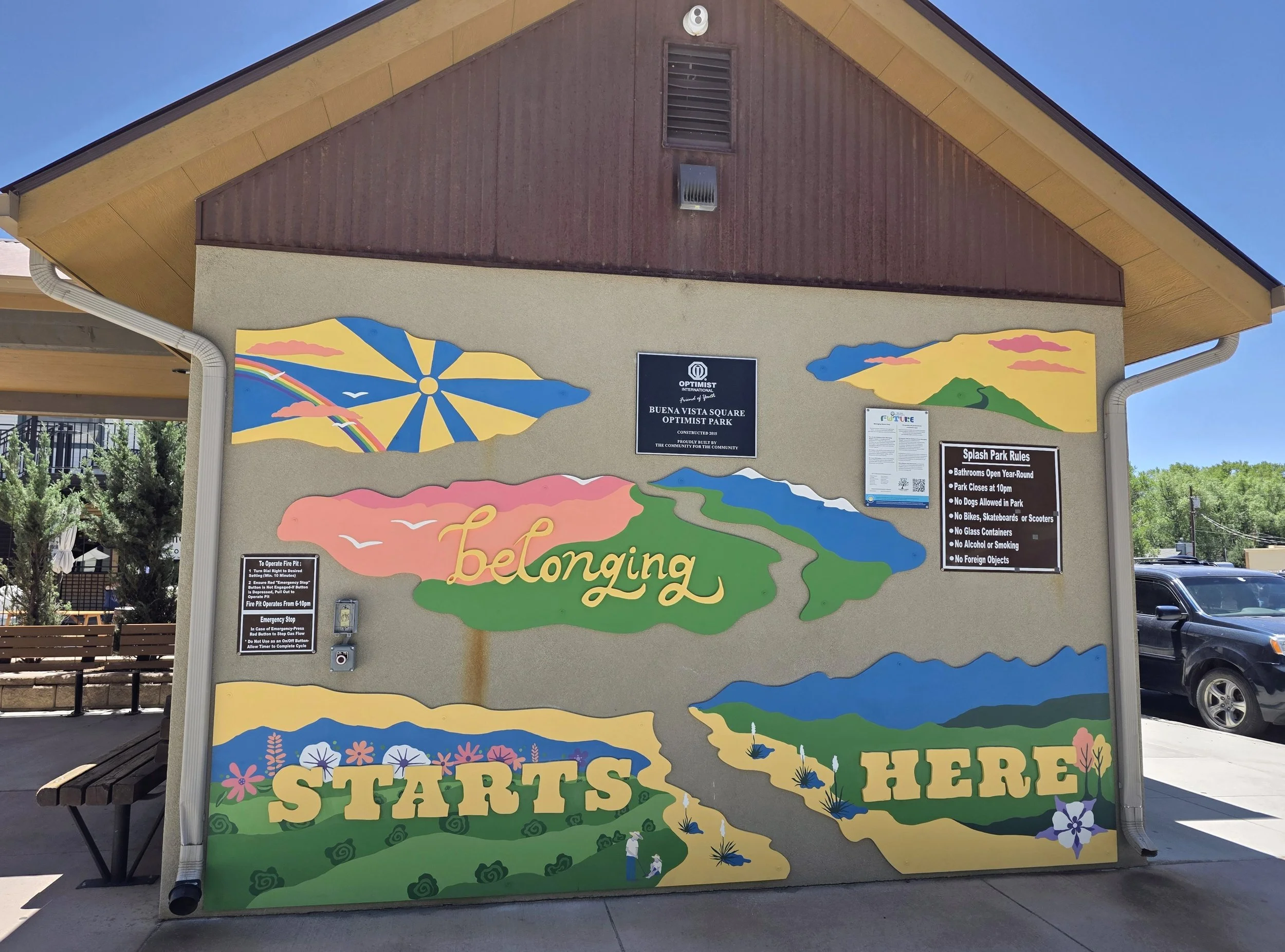
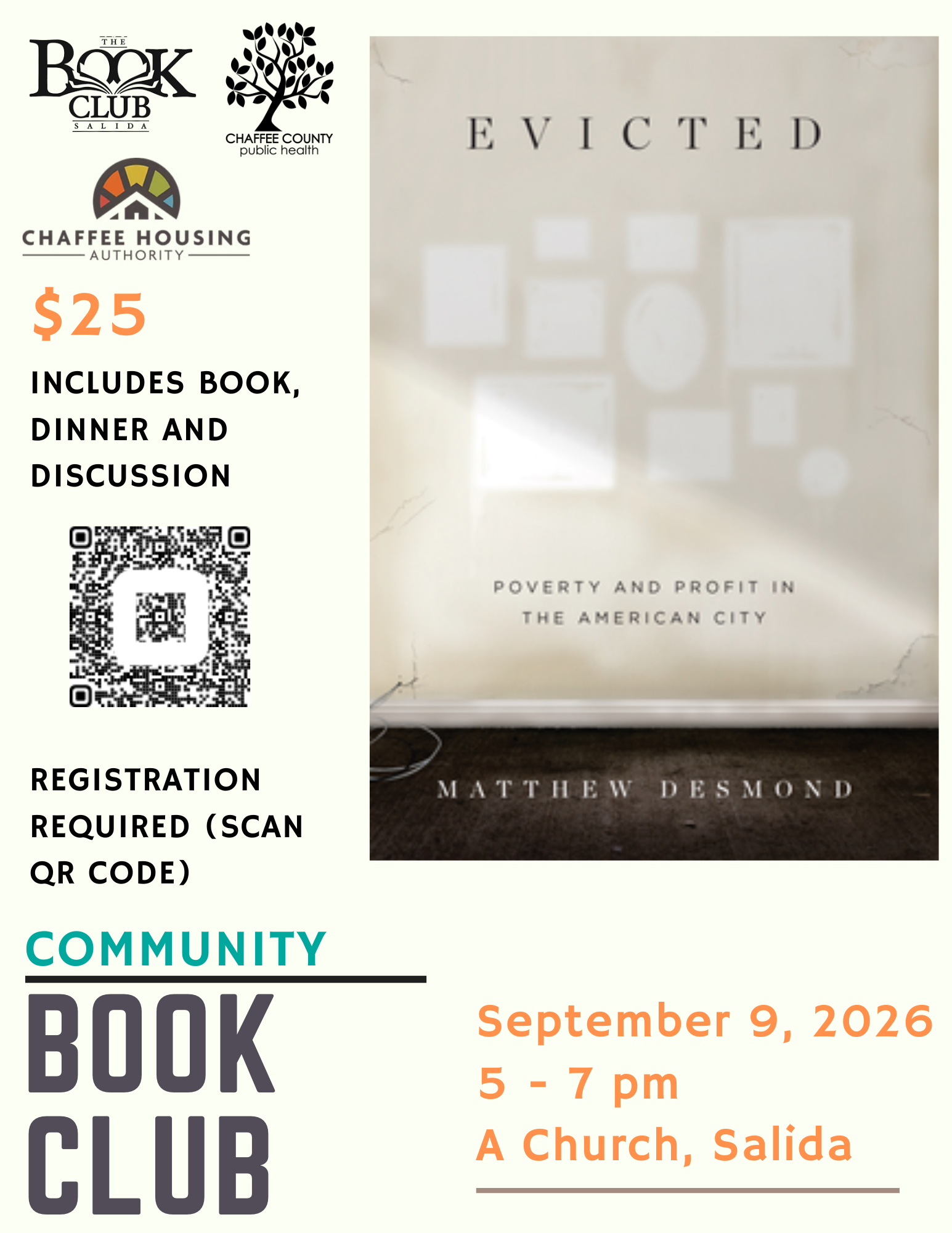
As part of NestQuest, CHA is a co-host with The Book Club and Chaffee County Public Health of a community read of Evicted. Written by Matthew Desmond, the book follows eight families in Milwaukee as they each struggle to keep a roof over their heads. Join us for dinner (provided by Little Cambodia) and a discussion exploring how poverty, community health, opportunity and housing are intertwined and what our community is doing to address housing access and stability. Community members from across Chaffee County are invited to participate. Sign up with the QR code below or this link.
For households earning below $60,000 per year who want to participate, CHA is offering to cover the costs of participation for up to ten individuals. Contact Marjo Curgus at marjo@chaffeehousingauthority.org for the private enrollment link.
Introducing Our New Team Member
CHA is excited to announce Autumn Kaiser has joined us as a property manager. Autumn is a long-time Buena Vista resident with deep roots in Chaffee County. She brings six years of experience in managing affordable and subsidized residential communities. We knew she would be a great addition to the team when she shared her career-long dedication stems from a fundamental belief that every person deserves access to secure and reliable housing, particularly those who encounter the most significant obstacles to stability. Her professional background includes managing Housing Choice housing for seniors, individuals with disabilities, and families navigating the path out of homelessness. Autumn will join David Kephart on the CHA Property Management Team and be focused on management of our rentals in Buena Vista. Welcome, Autumn!
We Have A New Website
You may have noticed we have a new look! With support from the Colorado Trust Community Resilience Initiative, we were able to engage Hello Rising Tide for a website revamp. Our primary goal was to make it more user friendly and easier for community members to find the information they need. Let us know if you have any feedback at info@chaffeehousingauthority.org.
If you received this newsletter without having subscribed, we apologize. Some subscription level data was lost during the transition. Please use the unsubscribe link in the email if you do not wish to receive this newsletter.
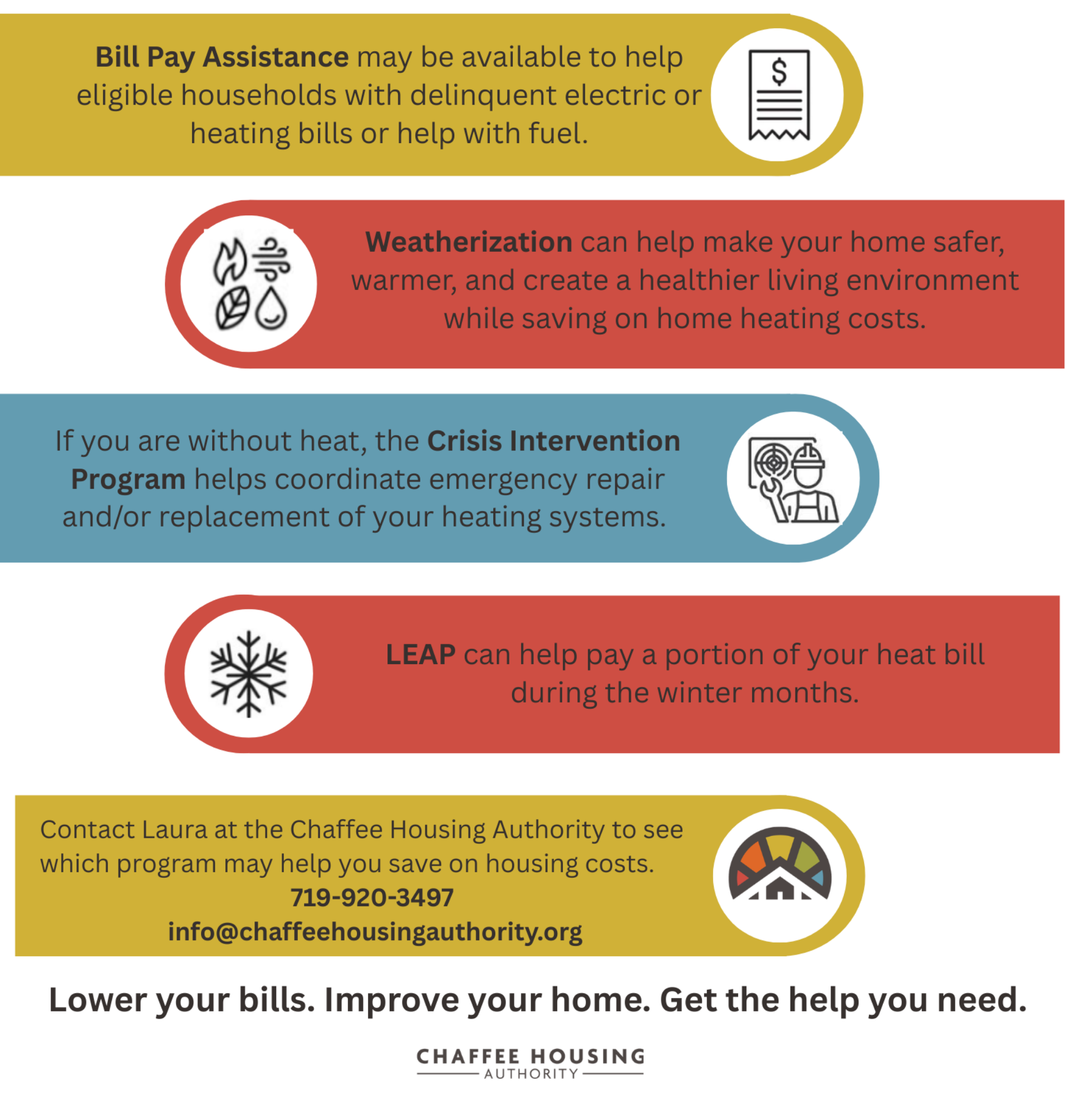
High Energy Bills Driving Up Your Housing Costs? Let Us Help!
Sign Up for The Home Front!
If you have not signed up for our newsletter, sign up here:
